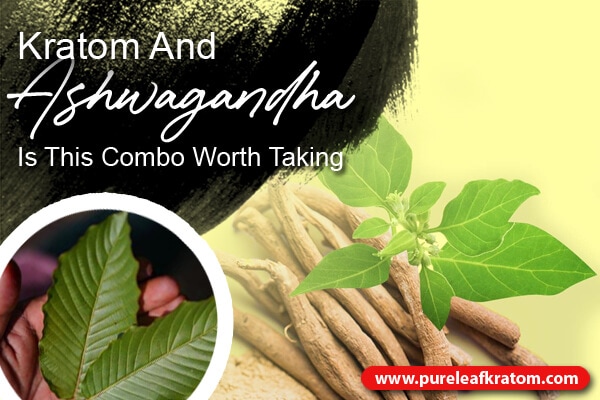
Kratom and Ashwagandha: Is This Combo Worth Taking?

Two different herbs, Kratom and Ashwagandha, have long been used for traditional purposes. Today, people are moving towards the use of these herbs in combination. Remembering their safety and effectiveness is crucial, and potential interactions may occur.
To ensure their safe and effective use, it is essential only to use them under the supervision of a healthcare provider. More information about each herb is provided below.
Where Does Kratom Come From?
A tropical tree with roots in Southeast Asia, Kratom is known by its scientific name, Mitragyna Speciosa. Kratom was occasionally employed as a natural substance in religious and ceremonial settings, much like coffee or tea.
For centuries, various problems have been traditionally treated with Kratom tree leaves. The active ingredients in Kratom leaves include mitragynine and 7-hydroxy mitragynine, which have drastic influential properties.
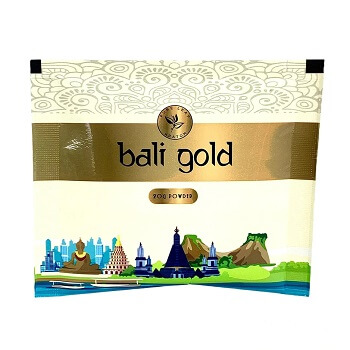 Click Here To Buy Premium Raw Kratom Powder Gold Bali Online
Where Does Ashwagandha Originate?
Ashwagandha is a tiny shrub with yellow blossoms indigenous to the arid regions of India, the Middle East, and portions of Africa. It is also known as Indian ginseng, winter cherry, or poison gooseberry.
The herb Withania somnifera, also known as Ashwagandha, has been used in traditional Ayurvedic substances for thousands of years. Conventionally, people use Ashwagandha roots and leaves to treat various ailments. Withanolides, alkaloids, and saponins are some of the active ingredients in Ashwagandha.
How Can We Consume Kratom and Ashwagandha?
There are numerous ways to consume these herbs, including capsules, powders, teas, and extracts. Depending on the needs and health status of the individual, the dosages and forms of each herb may vary.
Combining Kratom and Ashwagandha without first seeking medical advice is not a good approach at all. The right dose of each herb may vary depending on your particular needs and health situation, and the combination of these two herbs may have potential interactions. Thus, seeking a healthcare professional's advice is crucial to ensure the mixture is secure and efficient.
If your doctor approves the combination, there are various methods for consuming Kratom and Ashwagandha together. Taken as capsules or powders is one possibility. You can buy tablets or powders separately and combine them by swallowing the capsules or combining them with water or another beverage.
Making tea out of these herbs is an additional choice. The two herbs can be added to hot water and steeped for 5 to 10 minutes before filtering and drinking. It is vital to follow the advice given by your healthcare provider because the ideal dosages of each herb may vary depending on your specific demands and health situation.
Let’s get into more details.
Depending on individual tastes and accessibility, the combination of these two herbs can be taken in various ways. Here are some potential methods of consumption.
1) Capsules
Kratom and Ashwagandha are available in capsule form, offering a practical option to take the two plants together. You can take capsules with or without food and change the dosage to suit your needs.
2) Powder
Ashwagandha and Kratom powders can be blended to create a drink or to flavor food. Combine the powder with water, juice, or a smoothie to disguise the flavor.
3) Tea Extract
The leaves of these herbs are used to make herbal tea. The leaves are steeped in boiling water for a while, filtered, and then consumed. To enhance the flavor, sweeteners can be used, such as honey or stevia.
4) Tinctures or Liquid
Kratom and Ashwagandha extracts are both offered as tinctures or liquids. You can mix these extracts and take them as drops under the tongue or add them to a beverage or dish.
It is significant to note that depending on the form and the consumer’s health, the dosages of both herbs may change. Before ingesting them together in any form, it is advised to speak with a medical expert to be sure it is safe and effective.
What Is Their Traditional History?
Because Kratom and Ashwagandha are from different geographical areas and have distinct traditional purposes, how the two herbs have been combined in the past is still being determined. Yet they have been used for thousands of years in many cultures and have a long history of usage in traditional therapy.
Southeast Asia has long used Kratom for both therapeutic and recreational purposes. Kratom has been used to influence the experience of the native communities. It was also utilized by workers for personal productivity.
Dutch explorers who traveled to Southeast Asia in the 1800s brought Kratom back to Europe for botanical research. Later, in the 19th century, Dutch botanist Pieter Korthals recognized and named the plant Kratom.
On the other hand, Ashwagandha has been utilized in Indian Ayurvedic treatment for over 3,000 years. Its revitalizing and regenerative qualities make it one of the most significant herbs in Ayurvedic therapy.
Ashwagandha has expanded beyond its traditional use in Ayurveda to become a well-known and sought-after supplement globally. It is now frequently used in alternative medicine and natural health products.
With their possible synergistic effects, these herbs have recently drawn more attention. Some users claim that combining the two herbs results in a power boost that is more evenly distributed and has long-lasting influences.
Despite a clear historical precedent for combining Ashwagandha and Kratom, the two plants' current popularity in alternative medicine communities has sparked experimentation with their combined usage. To ensure safe and efficient use, however, it is crucial to use caution and consult a specialist before ingesting any herbal mixture.
What Does the FDA Say About the Use of These Herbs?
Concerning the usage of Kratom and Ashwagandha together, the FDA has not made any explicit pronouncements or recommendations. It is crucial to remember that the FDA has not approved Kratom or Ashwagandha for any medical purposes and has not given them a thorough assessment of their safety and effectiveness.
Due to the possibility of misuse, dependency, and the chance of unfavorable effects on the body, the FDA has expressed concerns regarding the safety of Kratom. The FDA has also warned about pollutants and contaminants in Kratom products, such as heavy metals, Salmonella, fillers, additives, and other dangerous chemicals.
Like there may be hazards or interactions with other drugs or supplements, Ashwagandha is generally considered safer and well-tolerated than Kratom. Still, the FDA has not assessed its safety or efficacy for any specific medical use.
As a result, it is crucial to use Ashwagandha and Kratom with caution and to speak with a doctor before combining them or utilizing them to treat a particular disease. Also, it is crucial to strictly adhere to dose and safety instructions and use only pure, high-quality items that are correctly labeled.
Conclusion
It is significant to remember that the effectiveness and safety of mixing Kratom and Ashwagandha have yet to be well investigated, and there may be unknown potential interactions.
As a result, it is crucial to only combine these herbs under the direction of a healthcare provider to guarantee that the combination is secure and suitable for your particular requirements.
Frequently Asked Questions (FAQs)
Q: How long does it take for Kratom and Ashwagandha to be eliminated from the body?
A: Both herbs have water-soluble and fat-soluble components in their extract. This may increase their stay in the body depending upon the individual's physiological conditions.
Q: What should you know about KSM-66 extract?
A: According to its manufacturer, KSM-66, Ashwagandha is an extract with a full spectrum, meaning it contains all of the root's bioactive withanolides, alkaloids, and flavonoids.
Q: What is the exact dose of this herb combination?
A: Healthcare professionals suggested starting with the smallest dose. However, the exact dose of Ashwagandha and Kratom still needs to be discovered as there has yet to be any authentic research made.
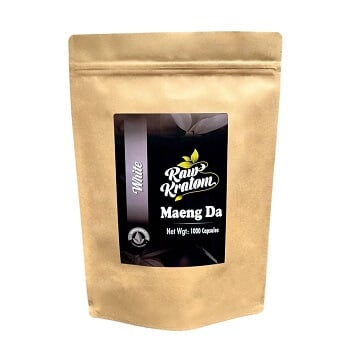
Click Here To Buy Potent Raw Kratom Capsules White Maeng Da Online