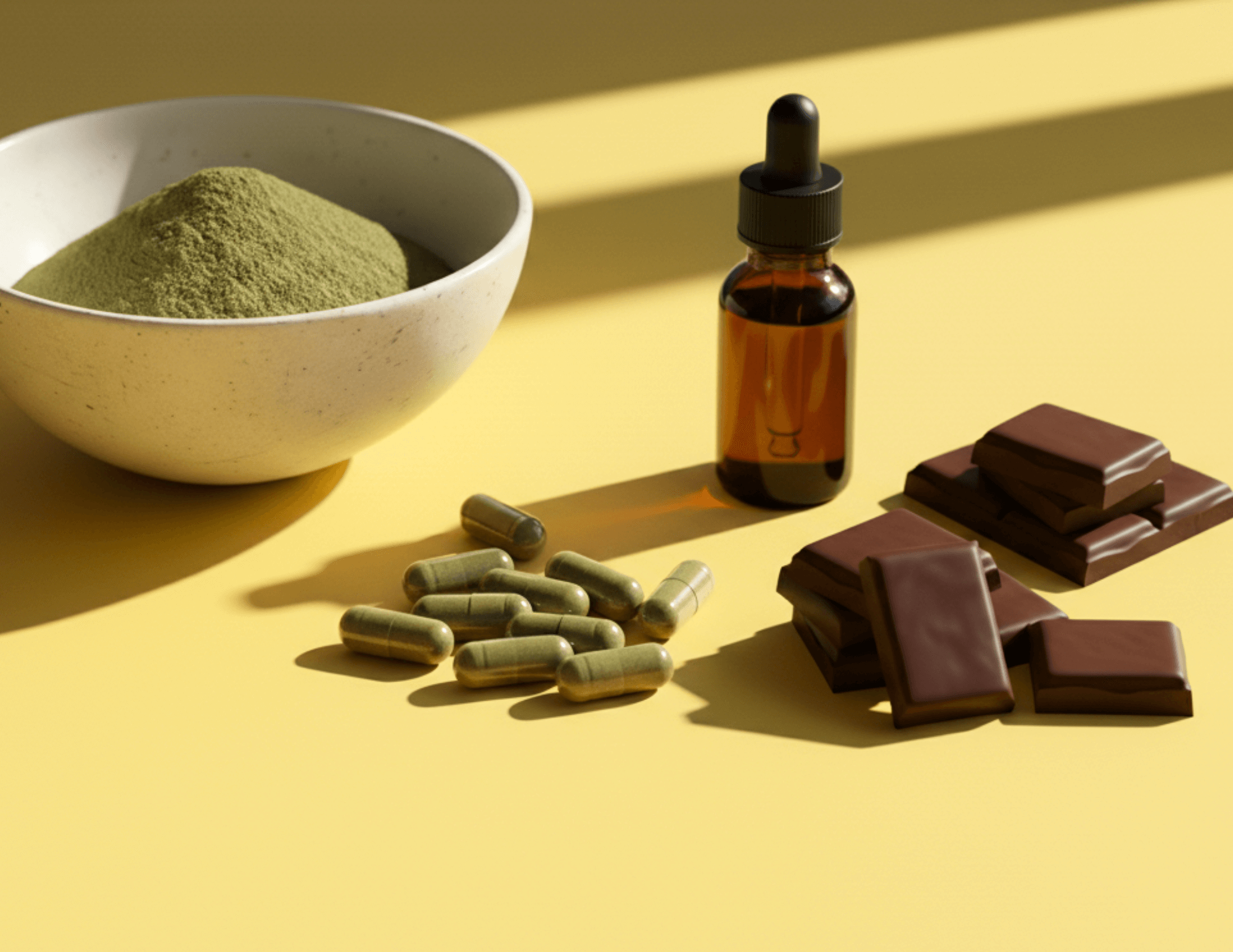
How to Choose a Kratom Product: Powders, Capsules, and Extracts—Pros, Cons, and What to Know Before Buying
Table of Contents
Choosing between powders, capsules, and extracts may feel overwhelming, especially with so many options on the shelf. This guide breaks down how to choose a kratom product that best suits you by explaining the differences in plain English. You’ll learn what sets each format apart, how people typically approach them, and what factors may matter most when comparing options.
Quick Highlights (TL;DR)
Kratom powder, capsules, and extracts differ mainly in form, concentration, and convenience¹²
No format is universally “better”; preferences often vary by lifestyle and experience¹
Transparency, sourcing, and labeling matter more than format alone³
Here we walk you through the basics to help you feel more confident navigating your selection
FAQs
Is one kratom format better than another?
No single format is universally better. Differences relate to convenience, concentration, and personal preference rather than format and quality alone¹.
Are kratom extracts the same as powder?
Short answer: No.
Extracts are derived typically from loose leaf or powdered kratom and commonly undergo further processing to concentrate certain components².
Do capsules contain different ingredients than powder?
Capsules typically contain powdered kratom inside the capsule shell¹. Some products may contain other ingredients (e.g. other herbal extracts or powder, etc), so it's key to read the label thoroughly and to do your own research³. The primary difference is the delivery method (in terms of consumption).
How should kratom products be stored?
It is usually recommended to keep the products stored in cool, dry environments away from light, excessive humidity, and heat³. Always fully read the label. Packaging guidance may vary.
Why does transparency matter when buying kratom?
Clear labeling and sourcing information help consumers understand what they are purchasing and how products differ³.
Powder vs Capsules vs Extracts – The Breakdown
Core takeaway: Kratom products are commonly grouped by form, not by quality or purpose. Differences are about concentration, processing, and usability—not superiority.
Kratom refers to products derived from the leaves of Mitragyna speciosa, a tropical tree native to Southeast Asia¹. The leaves are harvested, dried, and processed into different formats¹². Most of the time, these formats are often misunderstood as “strength levels,” when in reality they are delivery methods¹.
Kratom Powder
Kratom powder is made by finely grinding dried kratom leaves. It is one of the most traditional formats and is often used as a base ingredient for other products.
Key characteristics:
Minimal processing
Flexible for measuring
Easy to mix into smoothies, shakes, or any other recipe of your choice
Usually priced lower than capsules and extracts
Because powder is closer to the raw plant material, many consumers view it as a foundational option when learning how to choose a kratom product¹.
Kratom Capsules
Capsules typically contain kratom powder enclosed in a dissolvable shell¹. The contents are similar to loose powder, but the format emphasizes convenience and consistency.
Key characteristics:
Pre-measured servings
Neutral taste experience
Portable and discreet
Usually priced moderately, typically sitting right in the middle of powders and extracts
Capsules are often selected by shoppers who prefer simplicity over customization.
Kratom Extracts Explained
Extracts are made by concentrating specific compounds from kratom leaves into a smaller volume². This involves additional processing steps such as solvent extraction or refinement².
Key characteristics:
Higher concentration than powder²
Smaller serving size formats
More processing involved
Usually priced higher than powders and capsules due to the higher concentration.
Extracts are sometimes misunderstood as “stronger” in a universal sense. In reality, they are simply more concentrated, which may appeal to experienced consumers comparing how to choose a kratom product based on format preference².
Earth Kratom Red Maeng Da Powder
$9.95
Earth Kratom Red Maeng Da Powder Earth Kratom Red Maeng Da Powder is a premium botanical product known for its deep, earthy aroma and rich… read more

The Comparison
No format inherently replaces another. They exist to meet different preferences.
Pros:
- Flexible with mixing into other things (e.g. smoothies, etc)
- Usually undergoes minimal processing¹
- Lower cost
Cons:
- Naturally has a strong bitter taste
- If you don't like taking the time to measure things out (highly recommended) then you might not prefer this format
Pros:
- Convenient
- Consistent (pre-measured),
- Bitterness is minimal
Cons:
- Can't mix it directly into other things (e.g. smoothies, etc)
- Onset of effects may take longer as this format needs to get broken down within the body¹
Pros:
- Flexible with mixing into other things (e.g. smoothies, etc.)
- Typically very concentrated so you can "stretch" the use of the product over time
- If in tincture format, the dropper may have measurement markers on it for ease of use
Cons:
- Naturally has a strong bitter taste
- Usually higher cost
- Typically less forgiving for beginners
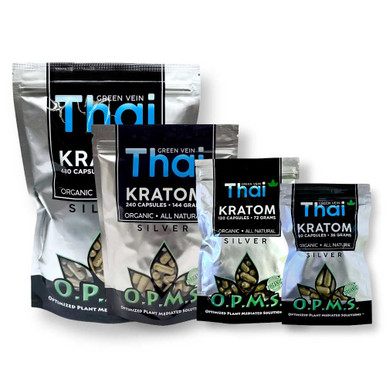
OPMS Silver Green Vein Thai Kratom Capsules
$6.29
OPMS Silver Green Vein Thai Kratom Capsules Premium quality Kratom Capsules from the lands of Thailand. The OPMS Silver Green Vein Thai Kratom Capsules is… read more
What to Look For, Common Mistakes, Matching Format to Lifestyle
Core takeaway: It's common to look for the format first and to overlook other important details about the product. Buyer confidence is often rooted in clarity, not complexity.
What to Look For
Clear labeling with ingredient transparency
Batch or lot identification
Accessible sourcing information
Understanding these elements may help clarify how to choose a kratom product beyond surface-level packaging.
Common Mistakes to Avoid
Assuming one format works for everyone
Ignoring serving size information
Overlooking product transparency
Preferences tend to evolve over time, and many experienced consumers report that their choices shift as they learn more.
Matching Format to Lifestyle
Busy schedules may align with capsules
Hands-on users may prefer powder
Concentration-focused shoppers may explore extracts
This is not about right or wrong—only about informed comparison and what your preferences truly are.
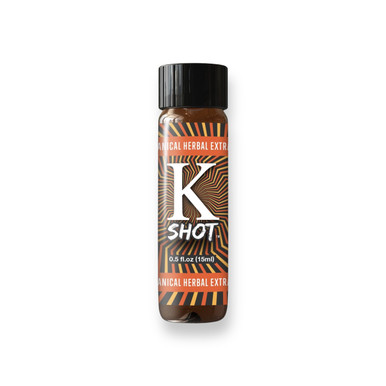
K Shot Kratom Liquid Extract
$8.89
K Shot Kratom Liquid Extract Explore the remarkable potential of K Shot Kratom Liquid Extract, a meticulously crafted botanical supplement designed to enhance your overall… read more
How We Approach Product Curation
Core takeaway: Responsible retail focuses on clarity and education.
As a kratom retailer trusted by thousands of individuals, we recognize that the community may approach their shopping with different levels of familiarity, so educational content remains a priority. We value brands and products that prioritize third-party lab testing and is supported by a valid Certificate of Analysis (COA).
We focus on organizing products by format, sourcing transparency, and clear labeling. We do our best to reduce confusion by categorizing products clearly so you can explore how to choose a kratom product for your lifestyle with less friction.
Conclusion — The Wrap-Up
Understanding formats, sourcing, and labeling is often the most practical way to approach how to choose a kratom product with confidence and clarity that feels in alignment with you.
Sources and References
¹ Singh, D. et al. (2022). Kratom (Mitragyna speciosa): User demographics, use patterns, and implications. Frontiers in Pharmacology.
https://www.frontiersin.org/journals/pharmacology/articles/10.3389/fphar.2022.801855/full
² Prozialeck, W. C. et al. (2019). Pharmacology of kratom: An emerging botanical agent. Journal of the American Osteopathic Association.
https://pmc.ncbi.nlm.nih.gov/articles/PMC7203303/
³ U.S. Food & Drug Administration (FDA). Kratom information.
https://www.fda.gov/news-events/public-health-focus/fda-and-kratom
Disclaimer
The products discussed here and any claims or suggestions made have not been evaluated by the Food and Drug Administration (FDA). This content is not intended to diagnose, treat, cure, or prevent any disease.
The information on this website is provided for general informational purposes only and should not be relied on as the sole basis for making decisions – we encourage consulting primary, qualified, more complete, or professional sources. Any reliance on the material on this site is at your own risk.
Information shared on this site may be updated at any time and may include information or data that are no longer current, accurate, or complete and is provided for your reference only. We are not obligated to update published content, and it is the reader’s responsibility to monitor any changes and to consult with primary, qualified, more complete, or professional sources.
We make no guarantees regarding the completeness, accuracy, or reliability of the information provided, nor do we warrant that any products, services, or materials offered will meet individual expectations. Use of this site and its content is at your own discretion and risk.