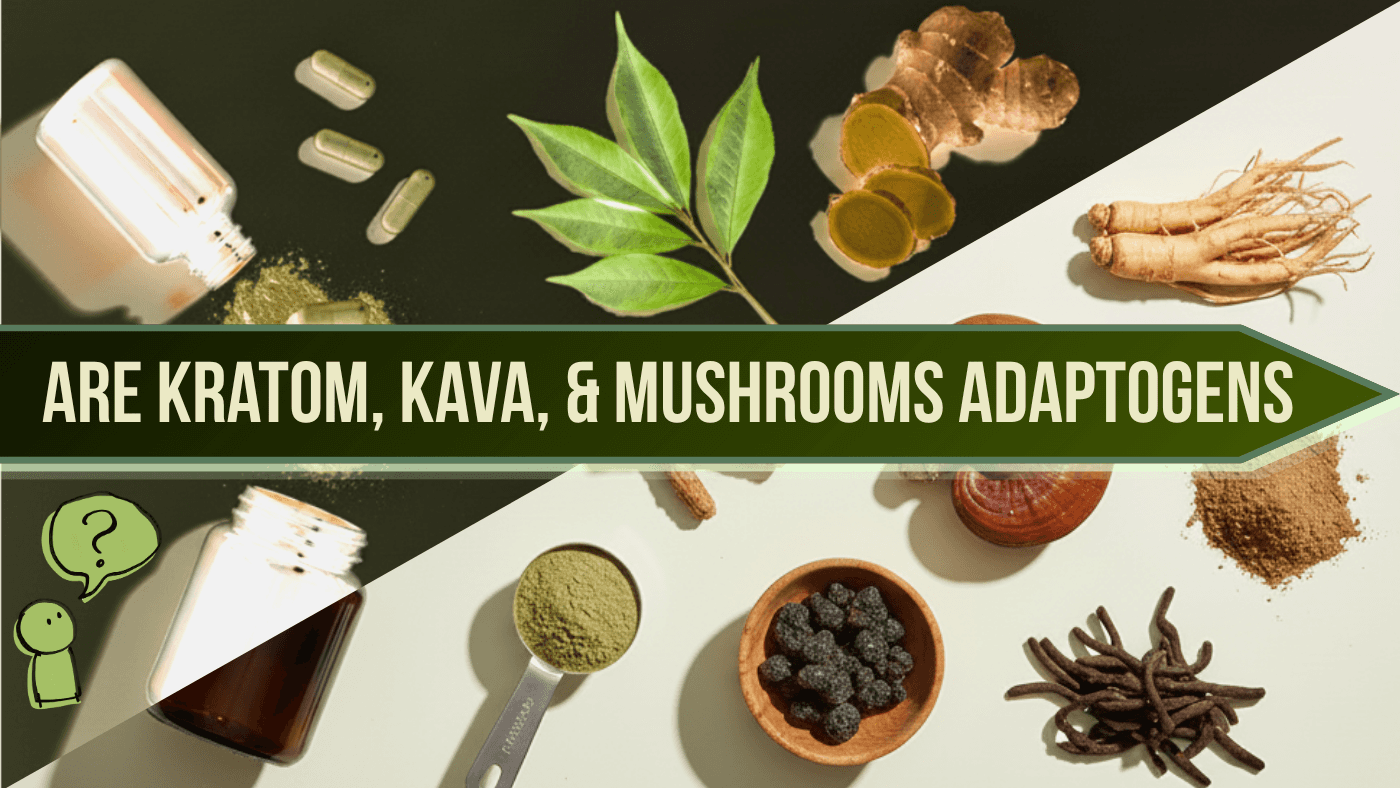
What Is an Adaptogen? A Practical Guide to Herbs, Mushrooms, Kava, and Kratom
Table of Contents
If you’ve spent any time exploring botanical wellness products, you’ve likely seen the term adaptogen sprinkled around and wondered “what does that do?” The term appears everywhere—from herbal supplements to functional beverages—yet the meaning often gets blurred by marketing language. This guide breaks down where the concept comes from, how scientists define it, and whether botanicals like kratom, kava, and mushrooms actually fit the category.
TL;DR—Quick Highlights
Adaptogens are a category of plants traditionally believed to help the body maintain balance under various forms of stress.¹
The scientific definition includes several specific criteria developed by researchers studying herbal medicine.¹
Common examples often discussed include herbs like ashwagandha, rhodiola, and ginseng.²
Functional mushrooms are sometimes grouped into adaptogenic discussions, though classification may vary by researcher.²
Kava and kratom are botanicals with long cultural histories but are not always considered classic adaptogens.
Understanding what an adaptogen actually is helps to navigate botanical products with more clarity.
FAQs
Are adaptogens a scientific category or a marketing term?
The term originated in scientific research during the 20th century. Today it is used both scientifically and commercially, which creates (at times, confusing) differences in how botanicals are perceived and categorized.
Are mushrooms technically adaptogens?
Some researchers and herbalists consider certain mushrooms adaptogenic, while others classify them separately as functional mushrooms. The distinction often depends on the criteria being used.
Are kava and kratom also categorized as adaptogens?
Retail environments and consumer conversations sometimes place botanicals with similar lifestyle uses together. However, their biological mechanisms differ from traditional adaptogenic herbs.
What formats are adaptogenic products available in?
They are commonly available as powders, capsules, tinctures, gummies, concentrated extract shots, and functional beverages, depending on (but not limited to) the brand, botanical, and extraction method.
What the Term Adaptogen Actually Means
The question of what an adaptogen is comes up often because the word itself sounds intuitive: something that helps the body “adapt.” But in scientific and herbal literature, the definition is more layered.¹
The concept gained traction in the mid-20th century when Russian scientist Dr. Nikolai Lazarev began researching plant compounds that appeared to influence the body’s stress response.¹ Later researchers refined the definition and proposed criteria that botanicals should meet to qualify as adaptogens.¹
The Scientific Definition
Researchers generally outline three core characteristics¹:
1. Non-specific influence
An adaptogen may support the body’s ability to respond to a wide range of physical or environmental stressors rather than targeting one specific system.¹
2. Normalizing effect
Instead of pushing the body strongly in one direction, an adaptogen may help regulate or balance physiological processes.¹
3. Safety profile
Traditionally an adaptogen is typically considered to have a relatively wide margin of safety when used appropriately within established herbal traditions.¹
Which Botanicals Are Traditionally Considered Adaptogens?
Across herbal traditions and modern research, several plants frequently appear in this category.²
Classic Herbal Adaptogens
Commonly discussed examples include:
Rhodiola (Rhodiola rosea)
Eleuthero (Eleutherococcus senticosus)
Panax ginseng²
These plants have long histories of traditional use and are often the reference point when researchers discuss what an adaptogen is in botanical science.²
What About Functional Mushrooms?
Mushrooms like reishi, cordyceps, lion’s mane, and chaga frequently appear in adaptogenic conversations today.
However, classification varies.
Some herbalists consider certain mushrooms adaptogenic because they may influence stress-related biological pathways, while others categorize them more broadly as functional mushrooms.²
Functional mushroom simply means a mushroom traditionally used for nutritional or wellness purposes beyond basic food use.
Wunder Entheogenic Nootropic Blend Mushroom Gummies Pink Lemonade 1200mg
$26.95
Wunder Entheogenic Nootropic Blend Mushroom Gummies Pink Lemonade 1200mg Wunder 1,200mg Mushroom + 1,000mg Blue Lotus Pink Lemonade Mushroom Gummies offer a vibrant, feel-good experience… read more

Are Kratom or Kava Adaptogens?
So what about kratom or kava? This is where things get interesting.
When people look up what an adaptogen is, they may assume any plant used for mood, relaxation, or focus belongs in the category. That’s not necessarily how botanists or researchers classify them.
Kratom
Kratom (Mitragyna speciosa) is a tropical tree native to Southeast Asia.
Traditionally, its leaves have been used in regional cultural practices (including chewing fresh leaves, brewing them into tea, and use in community and traditional labor settings) predominantly across Thailand, Malaysia, Indonesia, and Myanmar.
Its chemical profile includes alkaloids that interact primarily with μ-opioid (mu-opioid) receptors, with additional activity reported at δ-opioid and κ-opioid receptor pathways in the body.4
Because of this targeted activity, many researchers do not categorize kratom as a classical adaptogen. Instead, it is usually discussed in its own botanical category–public debate and regulatory scrutiny have also contributed to mass public perception, and to it being discussed separately from many other botanicals.
Kava
Kava (Piper methysticum) has deep cultural roots across the Pacific Islands (primarily Fiji, Vanuatu, Tonga, Samoa, Hawaii, and parts of Micronesia and Polynesia), where it has been used ceremonially for centuries (such as traditional kava circles and community gatherings).
The active compounds in kava are known as kavalactones, which influence certain neurological pathways–including interactions studied with GABA receptor modulation and other neurotransmitter signaling pathways in the brain–simply put, the compounds in kava interact with some of the brain’s communication systems that help regulate how nerve cells send signals to each other.
Given that the effects are relatively narrow rather than broad or balancing across multiple systems, kava is also not typically classified as a traditional adaptogen.
That said, both kratom and kava may appear in the same retail environments as adaptogenic products, which may contribute to confusion about what an adaptogen is in modern supplement culture.
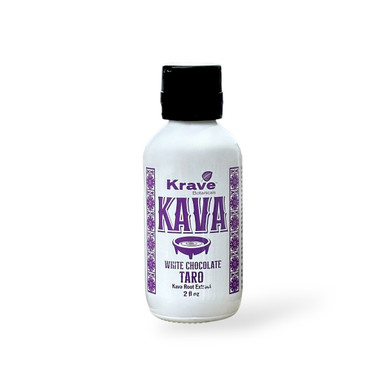
Krave Kava Root Extract Shot White Chocolate Taro 2oz
$7.95
Krave Kava Root Extract Shot White Chocolate Taro 2oz Krave Kava Root Extract Shot – White Chocolate Taro 2oz delivers a smooth, calming experience in… read more
Exploring Adaptogenic Products
Now, if you choose to browse this category of products, here’s what to look for when shopping for the right adaptogenic product for you.
Clear ingredient labeling
High-quality botanical products should ideally list:
plant species
plant part used
extraction method
concentration ratio when relevant
Botanical Identification
In well-labeled botanical products, you may see the Latin botanical name listed alongside the common name.
For example:
Withania somnifera (ashwagandha)
Rhodiola rosea (rhodiola)
This helps distinguish between plants that share similar common names but belong to different species.
Overall, this level of transparency helps us better understand what the product actually is and what it’s meant to do.
Sourcing
Botanical ingredients are agricultural products, meaning quality may vary depending on the following, but not limited to:
climate
soil conditions
harvesting methods
post-harvest processing
Extraction Transparency
Many adaptogenic products are made using extraction processes that concentrate certain plant compounds.
When available, helpful details may include:
extract ratio (for example, 10:1 or 20:1)
type of extraction (water, alcohol, or dual extraction)
standardization information, if provided
This information may help shoppers better understand how concentrated a product is compared with raw plant material.
Third-Party Testing
Some brands share testing information (Certificate of Analysis (COA)) conducted by independent laboratories.
These reports may evaluate factors such as:
identity verification of the plant species
purity
presence of contaminants
Not all brands publish this information publicly, but when available it may add another layer of transparency for consumers exploring botanical products.
Formats
Adaptogenic products appear in many formats today:
Powders
Capsules
Tinctures
Gummies
Tablets
Concentrated extract shots
Functional beverages
Each format differs in how it gets processed and absorbed in the body and often influences how people prefer to incorporate botanicals into daily routines.
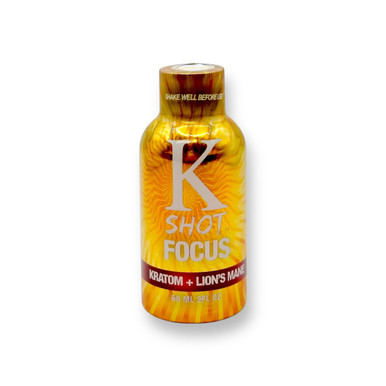
K Shot Focus Kratom + Lion's Mane Shot 60mL
$9.75
K Shot Focus Kratom + Lion's Mane Shot 60mL Enhance your clarity, energy, and cognitive performance with the K Shot Focus Kratom + Lion's Mane… read more
Out of Stock
Zooming Out on The World of Adaptogenic Botanicals
The adaptogen category may be both intriguing and a smidge confusing. When people in the community understand how terms like adaptogen are used—both scientifically and culturally—they’re often in a better position to explore products thoughtfully.
The term has expanded far beyond its original scientific definition. Some enthusiasts use “adaptogen” as shorthand for plant-based ingredients that may support balance in daily routines, even if the botanical does not strictly meet the historic and scientific criteria.²
We Focus on Giving You As Much Clarity As We Can
Transparent ingredient sourcing
Accurate botanical identification and labeling
Respecting both traditional and modern plant knowledge
Avoiding hyperbolic claims
In other words, our goal remains the same–helping people explore botanical products with curiosity and good information, rather than flooding you with hazy marketing lingo that clouds your experience.
The Wrap-Up
At the end of the day, the question of what an adaptogen is has both a scientific answer and a deeply rooted cultural one. Researchers originally defined adaptogens as plants that may help the body maintain balance when facing various stressors.¹ Several herbs, such as ashwagandha and rhodiola, commonly appear in this category.² Functional mushrooms are sometimes discussed alongside adaptogens, though classification may vary. Botanicals like kratom and kava have long rooted traditional histories but are not usually classified as classical adaptogens. For consumers exploring botanical wellness, understanding these distinctions may make the landscape far easier to navigate. We hope this helps.
Sources and References
1 Panossian, A., & Wikman, G. (2010). Effects of Adaptogens on the Central Nervous System and the Molecular Mechanisms Associated with Their Stress-Protective Activity.
https://www.ncbi.nlm.nih.gov/pmc/articles/PMC3991026/
(Purpose: One of the most widely cited scientific papers defining adaptogens and explaining the biological mechanisms associated with their stress-response activity.)
2 Panossian, A., Seo, E. J., & Efferth, T. (2018). A Preliminary Review of Studies on Adaptogens: Comparison of Their Bioactivity in TCM with That of Ginseng-Like Herbs Used Worldwide.
https://pmc.ncbi.nlm.nih.gov/articles/PMC6240259/
(Purpose: Reviews multiple studies comparing adaptogenic plants across herbal traditions, helping explain how adaptogens are understood in both traditional medicine systems and modern research.)
3 Panossian, A., Seo, E. J., & Efferth, T. (2021). Novel Molecular Mechanisms for the Adaptogenic Effects of Herbal Extracts on Isolated Brain Cells Using Systems Biology.
https://www.ncbi.nlm.nih.gov/pmc/articles/PMC8465040/
(Purpose: Explores modern molecular research into adaptogens and helps support explanations of how adaptogenic compounds may interact with biological stress-response pathways.)
4 Karunakaran et al. (2022). The Chemical and Pharmacological Properties of Mitragynine and Its Diastereomers: An Insight Review .
https://www.frontiersin.org/articles/10.3389/fphar.2022.805986/full
(Purpose: Provides a comprehensive scientific review of mitragynine and discusses its chemical structure, pharmacological properties, and interactions with opioid receptor pathways.)
Disclaimer
The products discussed here and any claims or suggestions made have not been evaluated by the Food and Drug Administration (FDA). This content is not intended to diagnose, treat, cure, or prevent any disease.
The information on this website is provided for general informational purposes only and should not be relied on as the sole basis for making decisions – we encourage consulting primary, qualified, more complete, or professional sources. Any reliance on the material on this site is at your own risk.
Information shared on this site may be updated at any time and may include information or data that are no longer current, accurate, or complete and is provided for your reference only. We are not obligated to update published content, and it is the reader’s responsibility to monitor any changes and to consult with primary, qualified, more complete, or professional sources.
We make no guarantees regarding the completeness, accuracy, or reliability of the information provided, nor do we warrant that any products, services, or materials offered will meet individual expectations. Use of this site and its content is at your own discretion and risk.