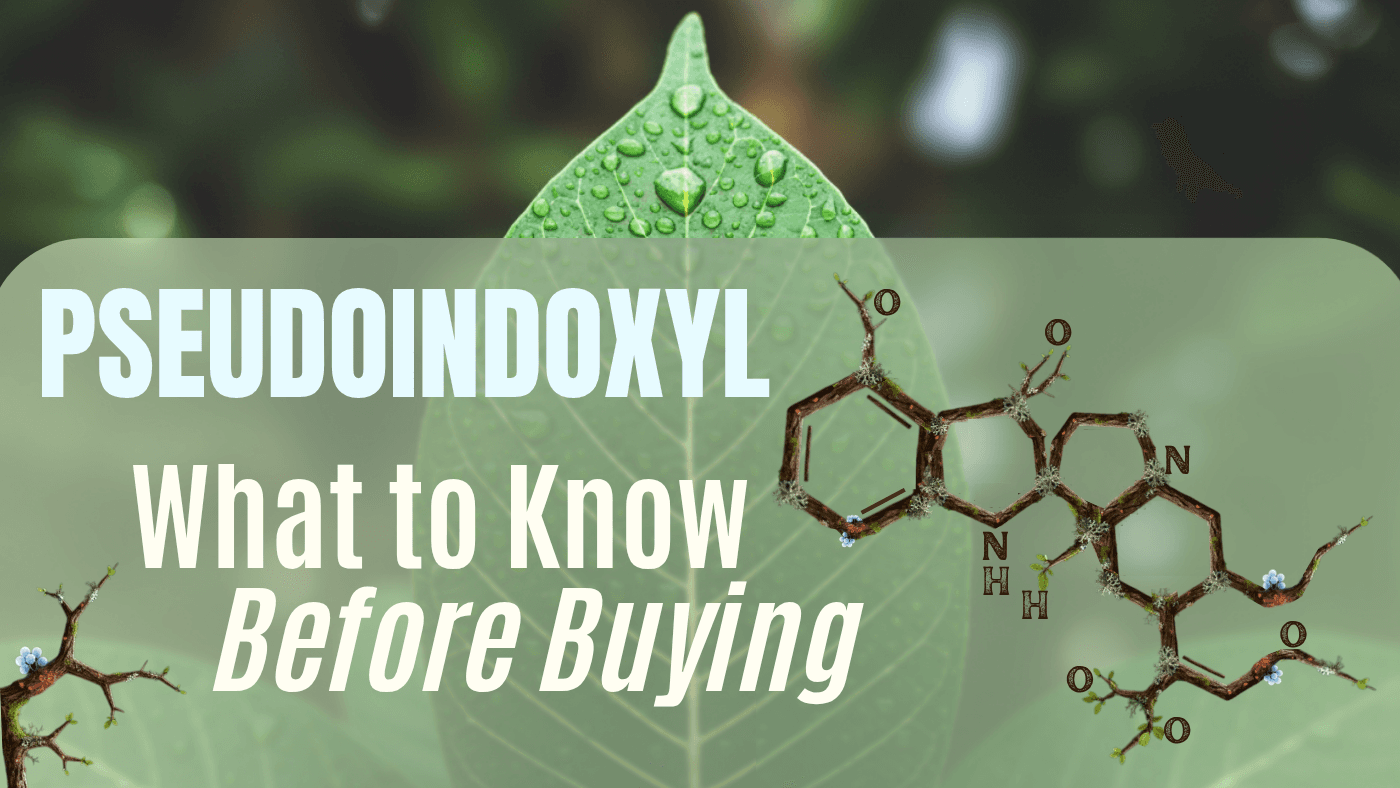
Mitragynine Pseudoindoxyl: What to Know Before Buying
Table of Contents
- What Is Pseudoindoxyl?
- Quick Highlights–TL;DR
- FAQs
- Where Does Pseudoindoxyl Come From?
- How Pseudoindoxyl Works: Mechanism of Action
- What the Research Says about Pseudoindoxyl Safety
- Pseudoindoxyl vs Mitragynine and 7-OH
- Pseudoindoxyl Dosage Guidelines
- Where to Find Lab-Tested Pseudoindoxyl Products
- Sources and References
- Disclaimer
What Is Pseudoindoxyl?
Mitragynine pseudoindoxyl refers to a class of compounds connected to kratom alkaloid chemistry, particularly transformations of mitragynine. In scientific literature, it is often discussed as a structurally modified alkaloid derived from Mitragyna Speciosa that arises through metabolic or chemical conversion pathways and interacts with opioid receptors in a distinct way compared to traditional kratom compounds.¹
While kratom leaf contains a wide spectrum of alkaloids, pseudoindoxyl compounds are typically associated with more chemically refined compounds rather than raw plant material.¹ ²
Quick Highlights–TL;DR
Pseudoindoxyl is a chemically modified kratom-derived alkaloid.¹
It interacts strongly with opioid receptors in laboratory studies.¹
It differs structurally and functionally from mitragynine.²
Research is still developing, especially in studies involving human physiological processes.²
Kratom alkaloids vary widely in potency and receptor behavior.³
Safety data in humans remains limited and evolving.²
FAQs
Is pseudoindoxyl naturally found in kratom?
Not in significant amounts. It is generally associated with transformation or derivation from primary alkaloids like mitragynine.²
Is pseudoindoxyl well studied in humans?
Human clinical data remains limited, and most findings are based on in vitro or preclinical models.²
Is pseudoindoxyl stronger than mitragynine?
In laboratory receptor studies, pseudoindoxyl derivatives show higher potency at certain opioid receptors.¹
What is biased agonism and why is it important here?
Biased agonism is when a single compound binds to the same receptor (in this case, opioid receptors like the mu-opioid receptor) but selectively activates certain internal signaling pathways while avoiding others.
In simpler terms:
The receptor is like a switchboard with multiple “routes” it can trigger inside a cell
A traditional full agonist tends to flip many routes on at once
A biased agonist “prefers” specific routes and leaves others less activated
So instead of a uniform “on/off” effect, the response becomes more selective and pathway-dependent.
Why this matters for mitragynine pseudoindoxyl
In the context of mitragynine pseudoindoxyl, biased agonism is important because research suggests it may:
Strongly activate opioid receptors linked to certain effects (like analgesia pathways)¹
Show reduced activation of pathways often associated with some opioid side effects in classical models¹
Behave differently from standard kratom alkaloids like mitragynine, which are less selective in their signaling profile²
This is why pseudoindoxyl is often described in scientific literature as pharmacologically “unusual” within the opioid system. Instead of triggering a broad, uniform response, it may favor more selective cellular pathways, which is a key focus in current research on its pharmacological profile.¹
Where Does Pseudoindoxyl Come From?
Mitragynine pseudoindoxyl is associated with chemically modifying alkaloids found in mitragyna speciosa (Kratom), the primary alkaloid in kratom leaves known for analgesic effects. Research suggests it may form through oxidative or metabolic processes that alter the original alkaloid structure into more receptor-active derivatives.²
Unlike raw kratom leaf consumption, mitragynine pseudoindoxyl represents a more chemically modified endpoint in this alkaloid pathway rather than a naturally abundant compound found in the plant.¹
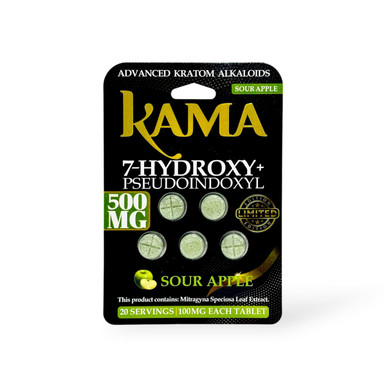
Kama 7 Hydroxy + Pseudoindoxyl Sour Apple 100mg Tablet
$31.95
Kama 7 Hydroxy + Pseudoindoxyl Sour Apple 100mg Tablet Kama 7 Hydroxy + Pseudoindoxyl Sour Apple 100mg Tablet is a premium, high-potency chewable crafted for… read more
Out of Stock
How Pseudoindoxyl Works: Mechanism of Action
Research suggests mitragynine pseudoindoxyl interacts with opioid receptors, particularly mu-opioid receptors involved in pain signaling and reward processing.¹
Unlike traditional full opioid agonists, kratom-derived compounds have been studied for more selective signaling behavior, which may influence how downstream effects are expressed at the cellular level.¹ ²
Opioid Receptor Binding and Biased Agonism
One of the most important findings in pseudoindoxyl research is its interaction with biased agonism pathways. This means mitragynine pseudoindoxyl may preferentially activate certain intracellular signaling routes while limiting others.¹
In simpler terms, receptor activation is not just “on or off”—it can be more nuanced depending on how the compound binds and signals inside the cell.¹
Pseudoindoxyl Effects: A Detailed Breakdown
Because research in humans is still limited, effects associated with mitragynine pseudoindoxyl are primarily derived from laboratory studies and broader kratom pharmacology.²
Reported or studied effects include:
Strong receptor-level activity in lab models
Sedation-like pharmacological profiles in related alkaloids
Variability depending on formulation and concentration
Differences in duration and intensity compared to standard kratom compounds
Mood Enhancement and Relaxation
Kratom alkaloids, including compounds related to mitragynine pseudoindoxyl, have been studied for their interaction with opioid and adrenergic systems that may influence mood and perception of relaxation.²
However, these effects are highly variable and not uniform across all users or product types.²
Kream Ohmz Pseudo + Kava + MIT Power Melon Chewable Tablets 150mg
$46.79
Kream Ohmz Pseudo + Kava + MIT Power Melon Chewable Tablets 150mg Experience a bold and modern blend with Kream Ohmz Pseudo + Kava +… read more
Out of Stock

Does Pseudoindoxyl Get You High?
This question often appears in consumer discussions, but the scientific framing is more complex. Mitragynine pseudoindoxyl shows strong receptor activity in laboratory settings, but human subjective effects are not well standardized in clinical literature.¹
Compared with traditional opioids, kratom alkaloids generally show different signaling patterns, which may influence their psychoactive profile.¹ ³
What the Research Says about Pseudoindoxyl Safety
Additional research on mitragynine pseudoindoxyl is still emerging. Most safety data comes from kratom alkaloid research broadly rather than isolated human trials on pseudoindoxyl itself.²
Studies highlight both pharmacological interest and the need for more comprehensive safety evaluation in human populations.² ³
Is Pseudoindoxyl Addictive? Understanding Withdrawal Risk
Because kratom alkaloids interact with opioid receptors, there is ongoing research into dependence potential. Mitragynine pseudoindoxyl has not been fully evaluated for addiction risk in isolation, but related compounds show strong dependence potential in frequent use contexts.² ³
Pseudoindoxyl Withdrawal: Signs and What to Expect
Withdrawal experiences described in kratom research literature may include:
Irritability
Nausea
Sleep disruption
Low mood
Restlessness
Cravings
These patterns are documented primarily in broader kratom alkaloid studies rather than isolated pseudoindoxyl research.³
Pseudoindoxyl vs Mitragynine and 7-OH
Compared to mitragynine, mitragynine pseudoindoxyl is significantly more structurally modified and may show stronger receptor binding in experimental models.¹
Standard kratom alkaloids tend to produce broader, less targeted receptor interactions, while pseudoindoxyl compounds appear more selective in laboratory receptor assays.¹²
Mitragynine is the dominant alkaloid in kratom, while 7-hydroxymitragynine appears in smaller quantities but is often more pharmacologically active. Mitragynine pseudoindoxyl is structurally distinct but conceptually linked through metabolic transformation pathways.²
These compounds all interact with opioid receptors, but they differ in how strongly and selectively they bind and activate signaling pathways.¹ This structural variation is a key reason researchers study them separately.
Pseudoindoxyl Dosage Guidelines
A “start low and slow, then assess” approach is best used here, especially given the variability in alkaloid strength across products.²
There are no universally established dosing standards for mitragynine pseudoindoxyl due to limited clinical research.
Where to Find Lab-Tested Pseudoindoxyl Products
Because mitragynine pseudoindoxyl products vary widely in formulation, third-party lab testing is an important quality signal. Transparency in alkaloid content and contaminant screening helps distinguish more reliable products from unverified blends.
Pure Leaf Kratom puts deep thought into curating products from brands we carry so you can rest assured that you're getting products that live up to what they say they mean.
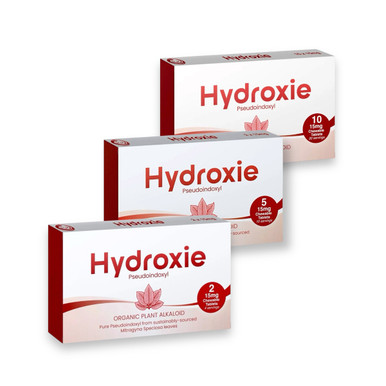
Hydroxie Kratom Extract Pseudoindoxyl Chewable Tablets 15mg
$2.96
Hydroxie Kratom Extract Pseudoindoxyl Chewable Tablets 15mg Hydroxie Kratom Extract Pseudoindoxyl Chewable Tablets 15mg offer a convenient and enjoyable way to experience the potent effects… read more
Out of Stock
Sources and References
¹ Váradi A, Marrone GF, Palmer TC, et al.
Mitragynine/Corynantheidine Pseudoindoxyls as Opioid Analgesics with Mu Agonism and Delta Antagonism, Which Do Not Recruit β-Arrestin-2.
https://pubs.acs.org/doi/10.1021/acs.jmedchem.6b00748
Purpose: Chosen for direct mechanistic evidence on pseudoindoxyl receptor activity and biased agonism.
² Kruegel AC, Grundmann O.
The medicinal chemistry and neuropharmacology of kratom.
https://www.sciencedirect.com/science/article/abs/pii/S0028390817303933
Purpose: Used for broader alkaloid context, metabolism pathways, and pharmacological classification.
³ Prozialeck WC, Jivan JK, Andurkar SV.
Pharmacology of Kratom: An Emerging Botanical Agent.
https://www.sciencedirect.com/science/article/abs/pii/S0376871614007935
Purpose: Selected for foundational overview of kratom receptor activity, effects, and safety considerations.
Disclaimer
The products discussed here and any claims or suggestions made have not been evaluated by the Food and Drug Administration (FDA). This content is not intended to diagnose, treat, cure, or prevent any disease. The information on this website is provided for general informational purposes only and should not be relied on as the sole basis for making decisions – we encourage consulting primary, qualified, more complete, or professional sources. Any reliance on the material on this site is at your own risk. Information shared on this site may be updated at any time and may include information or data that are no longer current, accurate, or complete and is provided for your reference only. We are not obligated to update published content, and it is the reader’s responsibility to monitor any changes and to consult with primary, qualified, more complete, or professional sources. We make no guarantees regarding the completeness, accuracy, or reliability of the information provided, nor do we warrant that any products, services, or materials offered will meet individual expectations. Use of this site and its content is at your own discretion and risk.